Industrial workshop looking across a harbour city in the Wharf Machine yellow-and-ink palette
Workshop / system view 01

Native software. Local intelligence.

Wharf Machine is an independent software company and workshop. We make our own products: Mac-native, local-first, designed around AI from the beginning. Creative direction, interaction design and engineering are one job here, done by the same people. Alongside our products, we lead a small number of engagements for other organisations.

Currently taking a small number of engagements

What we do / 01

01

Our software

We make tools we want to exist: native on the Mac, fast, and designed around AI from the beginning. You own what you buy. Intelligence runs locally where the task allows it, so capability does not disappear when a provider changes their terms. Recurring fees, where they exist, pay for recurring value.

02

Creative direction

Where a product's character gets decided: form, motion, tone of voice and the visual language around it. We work with generative image and video tools alongside conventional design tools, so direction shows up as rendered work early rather than as a deck. Brand and identity when the product needs one.

03

Product building

Native Mac software, web applications where the web is the right tool, and agentic systems, for organisations that want the same standard applied to their product. We lead the work from product direction and interaction design through prototypes, technical decisions and production software.

04

AI-native advisory

Helping organisations become AI-native across product, design, development and daily operations. We find where AI raises the pace and ambition of the work, then shape usable workflows and prototypes that teams adopt rather than admire, with evaluation loops that show whether a non-deterministic system is actually good enough to ship.
How we work / 02

The part that usually decides whether the work is any good.

One team.

Direction, design and engineering are the same people. Nothing is translated at a handover, because there is no handover.

Artefacts early.

You see rendered direction and running software in the first weeks. Documents follow decisions rather than standing in for them.

Small numbers.

We run few engagements at once, so the people who take the work do the work.

Yours to keep.

Code, weights, prompts and pipelines stay with you. No component of the system is ours to withhold.

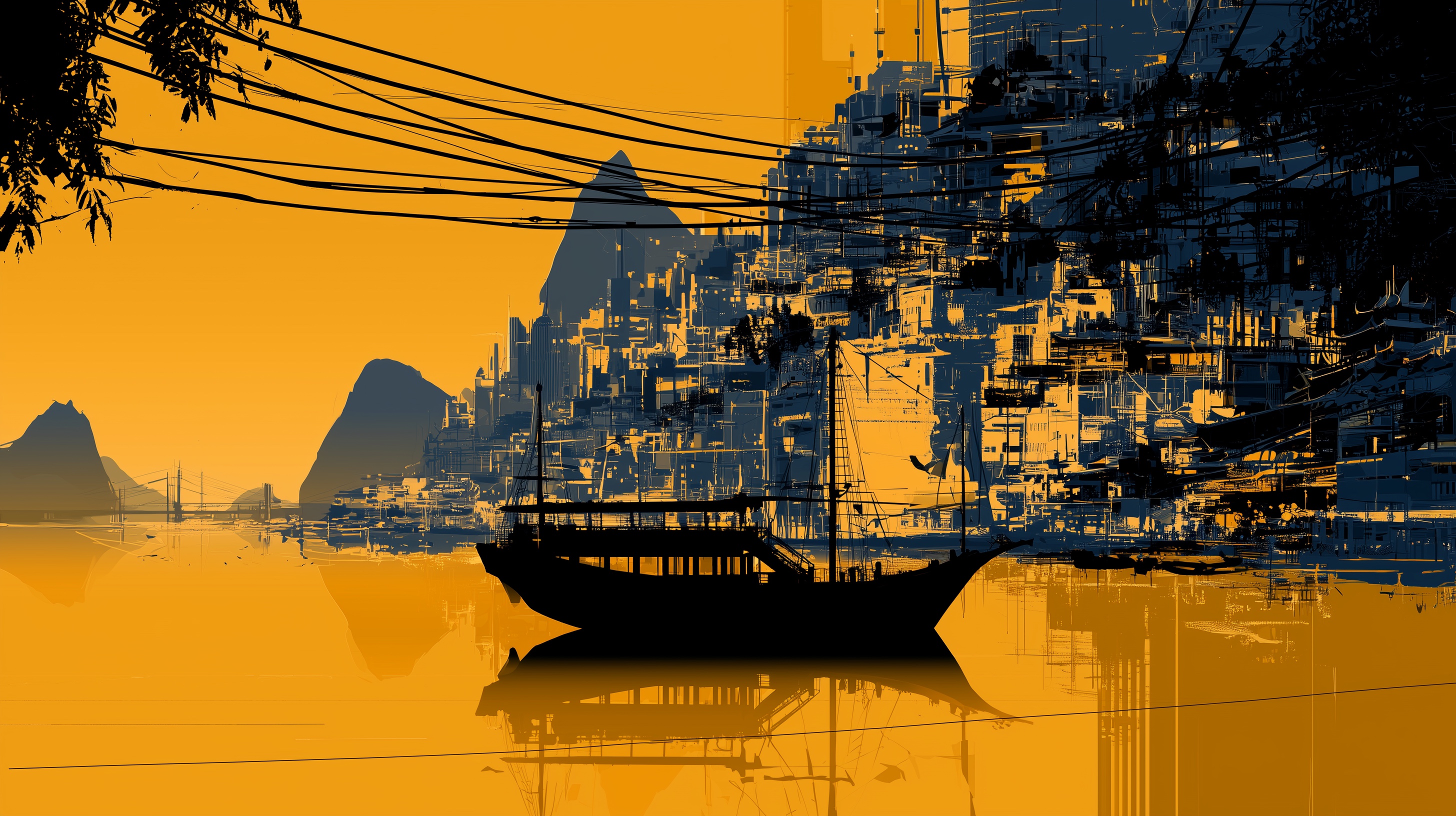
Harbour and ship rendered in the Wharf Machine yellow, petrol and ink palette

Local does not mean one device.

It means keeping capability, data and economics close to the product.

Local AI / 03

Local first

Run intelligence on the user’s Mac, a nearby Linux server or small edge hardware whenever the task and hardware allow it.

Open-weight

Build on capable models that can be run, evaluated and replaced without handing the product to one provider.

Cost-aware

Use hosted models only when their additional capability earns the additional operating cost.

Product-native

Put AI inside clear, well-designed workflows, not beside the product as another generic chat box.

Principles / 04

The values behind our own products, commissioned work and advisory.

Craft leads.

Creative direction and interaction design decide what should be built and how it should feel. They are part of product direction, not a finish applied at the end.

New tools, old standards.

We use generative models throughout the making, for imagery, for code, for evaluation. The work is judged on what it is, not on how it was produced.

Nothing ships unverified.

Non-deterministic systems need evidence. If we cannot measure whether it is good, we do not claim that it is.

The platform is a decision.

Native Mac where interaction quality, speed and platform fit decide the product; that is our default and our home. The web where reach and control matter more: a surface you open from anywhere, on anything, beats a better-feeling one you cannot get to. Chosen per job, never by ideology.

Local and ownable.

Prefer systems people can run, understand and keep. Recurring fees should pay for recurring value.